Virtual Reality's Expanding Role in Personalizing Experiences Across Britain's Casino Platforms
Blake Vogel · Oct 11, 2026
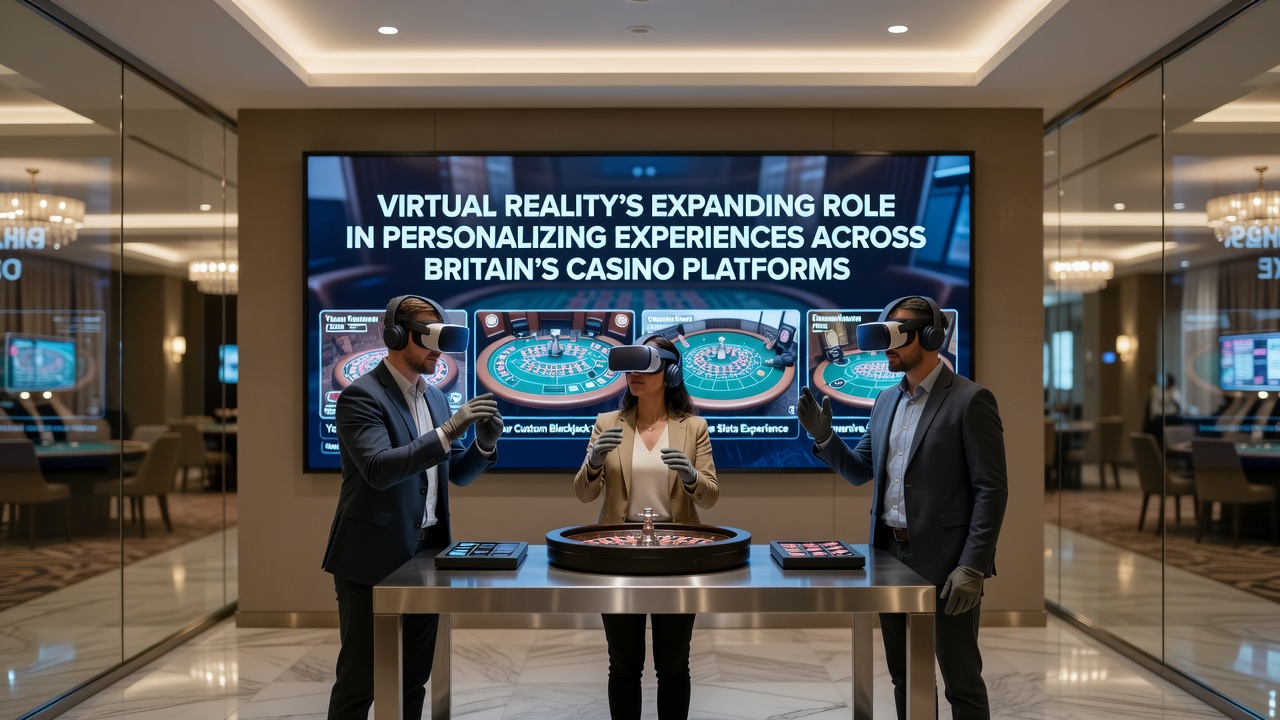
Virtual Reality's Expanding Role in Personalizing Experiences Across Britain's Casino Platforms
Virtual reality technology continues to reshape how British casino platforms deliver tailored experiences, and operators integrate VR systems with user data to adjust environments in real time. Platforms collect preferences during initial sessions, then adapt visual layouts, game selections, and social features accordingly. Data from industry reports shows adoption rates rising steadily through 2025 and into 2026 as hardware becomes more accessible and software compatibility improves across mobile and desktop devices.
Current Integration Patterns in British Markets
Operators in Britain deploy VR modules that connect directly to existing account profiles, allowing the system to recall past activity and modify surroundings without requiring manual input each time. Users who favor high-stakes table games encounter virtual rooms populated with similar options, while those who prefer slots see themed environments built around their favored mechanics. Studies conducted by the International Center for Gaming Regulation indicate that such personalization increases session duration by measurable margins, and platforms refine algorithms monthly based on aggregated usage patterns.
Hardware requirements remain modest for most participants, since many systems support entry-level headsets alongside premium models. This flexibility broadens access, and developers prioritize cross-device synchronization so progress carries over between sessions on different equipment. What's interesting is how these setups handle live dealer interactions, where avatars respond to individual player histories by adjusting dialogue tone and table pace.
Personalization Mechanisms Powered by VR Data
VR environments gather spatial and behavioral metrics that traditional interfaces overlook, including gaze duration on specific elements and movement patterns within virtual spaces. These inputs feed into machine learning models that predict preferred game variations and social groupings. One analysis from the University of Nevada's gaming research division found that platforms using such data achieve higher retention when they adjust lighting, soundscapes, and even virtual crowd density to match individual profiles.

October 2026 brought updated standards from several European technology consortia that emphasize secure data handling in VR casino applications, and British platforms responded by implementing additional encryption layers around user movement logs. The result allows for more precise customization while maintaining compliance with regional data frameworks. Observers note that these refinements reduce latency during personalization transitions, creating smoother shifts between different virtual spaces.
Case Examples from Platform Developments
Several major operators launched VR pilots that incorporate loyalty program data to construct bespoke lobbies. Participants who accumulate points through specific game types find those titles highlighted upon entry, and ambient elements such as background music shift according to recorded preferences. A separate initiative tracked by the Asia-Pacific Gaming Technology Association demonstrated similar outcomes in controlled trials, where personalized VR spaces increased repeat visits compared with generic versions.
Collaboration between software providers and hardware manufacturers accelerates these capabilities, and updates released throughout 2026 introduced gesture-based controls that feel more intuitive for new users. The systems also support multi-user sessions where each participant experiences a version customized to their own history, yet shares the same virtual table space with others. This layered approach maintains individual tailoring without isolating players from communal aspects.
Regulatory and Technical Landscape Through Late 2026
British platforms navigate technical standards set by international bodies that focus on accessibility and fairness in immersive formats. These guidelines encourage transparent algorithms so users understand how their data shapes the experience, and many operators publish summaries of their personalization methods. Research indicates that clear communication around these processes correlates with sustained engagement levels across diverse demographic groups.
Future expansions scheduled for late 2026 include deeper integration with biometric feedback devices that monitor comfort levels and adjust intensity accordingly. Such features build on existing frameworks while expanding the range of personal adjustments available during each session. Platforms test these additions in limited releases before wider deployment, ensuring stability across varying connection speeds common in British households.
Conclusion
Virtual reality continues to expand its presence on British casino platforms through targeted personalization that draws on detailed user data and adaptive environments. Integration patterns established by 2026 demonstrate measurable impacts on engagement metrics, and ongoing refinements in hardware compatibility and data protocols support broader adoption. The combination of spatial tracking, preference modeling, and regulatory alignment creates conditions where individualized experiences develop naturally within shared virtual spaces.